Or also known as-
Yes, I Know There Are A Lot Of Snakes In My Novel, But That’s How Many There Really Were
(I think I’ll stick to the first title, it’s shorter.)
(Warning: if reading about snakes or killing snakes bothers you, don’t read further.)
So the critiques from my betas for Gilt Ridden are trickling in. (Actually, they’re all in. I’m just being pokey about getting through them.) And the comments are pretty much what I thought they’d be. Which makes me happy. It means that what I was feeling about the writing is what readers felt too.
And as with any novel that has some moments based on real events, there is a balancing act between showing the true facts and writing what is best for the story. While writing the scenes in which my main character is either killing rattlesnakes or searching for them, I knew the reader would be getting tired of it. But that’s what life on our ranch was really like.
Looking for snakes and killing them was my hobby. It was an ever-present task. Even doing a visual sweep inside of the house was a part of the ritual. When we moved to the ranch, our son was only 3, so the danger of a rattlesnake was very real. And the nearest hospital was a 30 minute drive away. By the time we moved away six years later, I had killed over 200 rattlers. They had become such a part of our lives, if a day went by and I hadn’t found one, it seemed like a boring day.
Some people have asked me, “Why did you stay out there? I would have moved!”
Well, have you seen those ghost stories where the family can’t move because every cent they had went into the house? That was us when we first got there. We had no other option. At least we didn’t have to do an exorcism. Shovels and shotguns worked just fine.

Ranch House
One of the reasons I felt compelled to include so many snake “interactions” in the story is because I was trying to show the world what living in West Texas was really like. Whenever I tell people some of the things that happened, they say, “You have to put that in a book!” Well, I tried and while I was writing I knew people wouldn’t believe it. It’s just too much for some folks, I guess.
So I’ll be revising the book.
I also want to tell you a comment someone said to me. (paraphrased) “I’m having trouble with a couple of scenes because Kay’s background isn’t the same as yours. She’s not exactly like you.”
My response, “I’m boring. I had to make Kay more interesting. That’s why it’s called ‘fiction’.”
I must add that when I let myself be free of, “What would I have have done? What really happened?”, the story was much easier to write. I had to remind myself that it isn’t a memoir, it’s fiction. I hope this doesn’t come across like I’m mad. Far from it, I’m grateful to my beta readers! I just thought I’d use this platform to share with you what life was like out there and how reality isn’t necessarily what’s best for the story.
Too many snakes for you? You should have tried living there.

The most snakes killed in one day, 18.
Posted in Writing by VP with .
I had a lot of fun writing this post. It was a bit of an “aha” moment for me to think of music structure and story structure as being similar.
Originally posted on Austin Mystery Writers.
You know how some songs are more appealing than others? They just seem to have that “something” that people like. I think the same thing is true for books. Obviously a book should have good writing, unlike some blockbusters. But I won’t be tacky and mention anything about supernatural animals or domineering billionaires. Nope, I won’t stoop that low. My inner goddess says it’s not polite.
I’ve recently tried my hand at writing music, so I’ve been studying the structure of songs. The way the verses and chorus are laid out are comparable to poetry. Then one day I noticed that the music itself is similar to story structure. Even different types of songs can compare to different genres. (All links provided are from “official” Youtube channels or websites.)
Typically most pop, rock, or standard music that we listen to follows a pattern:
Intro, Verse 1, Verse 2, Chorus, Verse 3 [Usually a variation of the tune], (Maybe Verse 4) Chorus [Maybe with a variation to change it up a bit.]
For instance, here’s Real Gone by Sheryl Crow
I love that song! The intro does exactly what it’s supposed to do. It sets the tone for the piece. The variations on the theme and the constant fast beat keep it from getting boring.
I think it’s like a lot of popular books out there. It’s got a good beat and the tempo doesn’t let up for the whole story. I think of thrillers that have constant action. A variation on theme helps to keep things interesting. Maybe like James Bond and his extra curricular activities? He’s still James Bond, just a variation on the spy theme.
Is your song funny, fast-paced? Do crazy things happen throughout? Sounds like it might be a jazz piece. This style works great with crazy chords and countermelodies. Melodies are deconstructed but always return to the melody. So remember, don’t be distracted by tangents, always return to the melody, but keep it fun.
Here’s a perfect example of some swingy jazz.
Morris Nelms- Love To Swing.
But what about other songs, like maybe orchestral pieces? How do composers keep them interesting? Do they follow a pattern too? Is it similar to a story arc or story structure?
Breath and Life by Audiomachine.
The intro sets the mood. The pulsing beat keeps it moving. The melody plays then repeats. (Verse 1 and Verse 2) Then after a short change, the music grows and they vary the tune. It grows and grows with intensity, volume, and moves higher. It finally reaches the ultimate point. Then it dies off. The structure is not so much an arc, more like a wedge that just grows then drops off. Personally, I prefer a story to grow to almost the very end.
And here’s the part that absolutely fascinates me. Notice that while the singers and the main melody have long notes, there are always the underlying beats that keep it moving? I like to call this microtension.. I believe I first heard the term from Donald Maas.http://absolutewrite.com/maas_fire_excerpt.html
Good writing, no matter what genre, has microtension to keep the story flowing. It’s what keeps your characters growing and interesting.
Here’s another song by Audiomachine called Equinox
While you listen to it, think about the pulsing under the long notes and feel how it grows. Now imagine your story or any story. Does it grow like this? Do your secondary characters highlight your antagonist and protagonist, like the chorus and instruments provide harmony? What is height of your story? I like the little tag at the end. It’s an echo of the theme. I think the best stories have a little scene at the end that sums up the journey, whatever it may have been. (I mean good grief! Don’t you want to read the story that fits this music?)
I can’t help myself. Here’s another called The Fire Within
And one last song. This isn’t as dramatic as the others. But I think it’s a perfect example of the relationship between a protagonist and an antagonist. The relationship of the two should mirror and echo each other. This is a relaxing song, like I said, not dramatic. But I love the echo of the piano and the harmony of the flute.
The Gift of Love by The O’Neill Brothers
So I’ll leave you with this. In the first words of your story, write an intro that gives your reader a taste of what’s to come. Set the melody. Support your story and characters with harmonies, and counter melodies. Don’t keep things the same. Grow by changing the key signature and keep the beat pulsing. Grow, grow, grow! Make it bigger! Give it a dramatic finale and end with a reflection, a bit of the original melody to remind the reader of the journey. Good luck. And if you have a favorite song that makes a perfect story, feel free to share with us in the comments! I’m always on the lookout for new music.
Links:
www.audiomachine.com
www.morrisnelms.com
http://www.pianobrothers.com
Posted in Writing and tagged Audiomachine, Austin Mystery Writers, Donald Maas, Morris Nelms, Sheryl Crow, The Piano Brothers by VP with .
George Wier was nice enough to agree to an interview. Thank you, George!
He’s a personal friend of mine so he knew I’d give him grief if he didn’t. 😉
I know that you’re not originally from Austin. How did you get here?
I moved to Austin in 2002 from College Station. One day I took a look at the world around me and realized that most of my friends and all of my family had moved away. Also, after thirty years of living in Bryan-College Station, I knew everyone and everything that I wanted to know. In a word, I was bored. I called an old friend who lived in Austin and told him about my dilemma, and without even the hint of hesitation, he offered a spare room in his apartment and told me to load up my meager possessions and come on. I left the next day. This was about September or October, not far from my 37th birthday. I was essentially–and with malice aforethought–wiping out an old existence and beginning a new one. I was time to do that. It was one of the best decisions I ever made. Apart from rooting for the old home team (the Aggies) I took to Austin like a duck to water. I’m home now.
Have you always been a writer? Was there a book that inspired you to write?
Yes, I have always been a writer, ever since I could read. My first inspiration was comic books and film. My first actual attempt at a complete narrative was essentially a skit that was somehow a cross between a story and a script, and was actually inspired by Monty Python. I couldn’t do humor well, though, and sight gags were not my thing. The earliest, clearest influences on my writing came from science fiction, particularly Frank Herbert’s Dune books. I loved those. There is one story idea from those early days that I will attempt sometime in the near future. It’s about an outpost at the fringe of human expansion into the universe, and will be sort of a cross between Castaway and the Star Trek universe. We’ll see, though, if I ever get that done. My hopper is pretty much loaded up at the moment.
Along about 1976 or ’77, I was given a collection of Doc Savage paperbacks by my best friend’s sister. Her name was Peggy Dale Taylor. The Doc Savage books she gave me were the 1960s and ’70s Bantam paperback reprints of the old Street and Smith Doc Savage series written under the pen name of Kenneth Robeson, but mostly actually penned by Lester Dent, who though originally from Missouri, was a member of the Explorer’s Club in New York. Dent wrote about a quasi-private investigator, quasi-superhero named Clark Savage, Jr., and his five aides, who traveled the world righting wrongs and punishing evildoers. They sparked the imagination of this young teenager and would later very largely influence my Bill Travis Mystery series. The difference, however, between Doc Savage and Bill Travis is that Bill is based in Texas and rarely crosses the state line, he doesn’t have a lot of gadgets to help him out, and his small collection of friends are more from the “friends in low places” crowd, and less from the “cream of the crop”. I’ve written ten Bill Travis books, and there are at least eleven more to go before I round out the series, including three prequels. And by the time I’m at the end of that long runway, I should–hope springs eternal–know how to write.
Tell us about the different genres you write. Does the genre influence how you approach or plot your book?
Mostly, I write MY genre. I’m not sure what that is. For instance, the Bill Travis books, though billed as mystery, occasionally cross over the line into the fantastic, or you might call it Science Fiction. The first book, The Last Call, is straight action-adventure. The second book, Capitol Offense, while it has elements of action-adventure, is at least half mystery with some elements of political intrigue. The third book, Longnecks and Twisted Hearts, quite definitely crosses the line into science fiction, yet remains mostly a murder mystery. Books four and five, The Devil to Pay and Death On the Pedernales, are both pretty much straight mysteries. Book Six, Slow Falling, has so much science fiction that it should probably be classified as such, yet it’s my favorite of all of them. And so on through the series. By the time we get to book ten, Ghost of the Karankawa, Bill Travis meets Bigfoot. So, there you go.
Genre doesn’t so much influence me. The story does, however. It’s going to ultimately be whatever it is. I don’t write from outline, or at least in those few instances when I have and “knew” what was coming in later chapters, the outline might be a simple sentence of what was to happen in that chapter. About the only time I do that however, is either when I’m skipping around in the book and writing it in a non-linear fashion or when I’m collaborating and my co-author needs to fill in what I skipped over. In the latter instance, it’s at least courteous for me to provide some clues as to what, in general, I think should happen here and there in the story. I guess that’s about it on that.
As a side-note, I don’t like to read a lot of books in the genre in which I’m going to be doing any extensive writing (i.e., mysteries) because I don’t like to be unduly influenced by other writers. People tell me that my writing style is similar to John D. McDonald. I must confess, I’ve never read a John D. McDonald book. I hear that they’re wonderful, and at the top of the mystery genre, so I always take that as a high compliment and accept it as gracefully as I can. But, I’ll only read a mystery if it’s written by a friend and this friend needs an endorsement or a general leg up. That’s about it.
What is the secret to your success?
Writing is like anything else. Most of the battle is won by showing up. You have to sit down and write. You have to write a lot. You have to produce, bang out copy, write like there’s no tomorrow (there really isn’t, after all, there is only today!), plan and scheme and push the envelope. However, I think what you’re asking me is for some formula. Okay, I’ll give it to you. Here are my “secrets” to success (it’s interesting to me that there are no real secrets. The nature of the universe is that we all think that there’s some great secret hidden back of the curtain of reality, and that if we could only somehow penetrate that curtain, why, we’d HAVE IT and we’d simply do that magical little formula and the world would lie at our feet. The secret of the universe is nothing. This is also the definition of a mystery. A mystery is: the answer was not given. That’s all a mystery is. The mystery of the universe is a big fat zero. We don’t do well, as a species, with zero. Nothing is difficult to confront. If you don’t believe me, try walking through an unfamiliar house full of furniture in the pitch blackness. You move slowly, at best, because you’re pretty sure you’re going to hit something hard and kill your shins, or fall down and break your neck. So, in our minds, that darkness, that big zero, is really “something”. (Let me tell you, it’s not!):
I have, this lifetime, sifted through quite a bit of data on success. I’ve narrowed my findings to ten basic points:
1. Work toward your goal every single day.
2. Do not let the sun set without accomplishing something towards it.
3. Hold on to any wins you achieve along the way and disregard the losses.
4.Don’t allow anyone to evaluate or invalidate your goals, your dreams, and particularly your abilities.
5. Thinking about a thing is not the same as doing a thing. Success is only ever accomplished through action. The dream, however, must give your actions purpose and life.
6. Treat your goals as if they are living beings, and grant them life.
7. All other rules apply with regard to your goals, particularly the Golden Rule.
8. Study, learn and become the top person on the planet in your field. Knowing WHY is of immense value. Knowing HOW will guarantee prosperity. Knowing both HOW and WHY is everything.
9. If you get mad at someone or something that stands in your way, you have granted them or it immense power. Become unflappable. In any situation you are the expert. You are the source. Unquestionably. Success is hidden in the minutiae. It’s the small things that, brought together, create the whole.
10. Fortune and fame are illusions, and at best are fleeting. Don’t seek these. Instead, seek happiness. You will ultimately find that it resides within you.
I’ve found that most writers have other talents. What are your other talents?
Well, that’s a loaded question. I like to think I’m adept at everything I do, and typically overinflate my abilities, at the very least to myself. However, I like to draw (with a mechanical pencil), I paint, I play violin and I play country fiddle, and I do other things I’m not supposed to do.
Some of George’s pictures
West Texas Fall Secret Meadow
Do you have any advice particularly for mystery writers?
The main piece of advice, I suppose, is what I said above about not reading too much in that genre. But really, you might like to read mysteries and want to write them as well. Really, it’s a personal preference on my part not to do so. I also write a little science fiction, for instance, and I am so well-read in that genre, and will continue to be so, that it’s impractical for me to even think about not reading science fiction. So, whatever your write, whether it’s mystery or romance or whatever, you should write what my friend Joe Lansdale calls “your own genre”. Your writing is YOUR genre. Write what you want to write, and how you want to write it. And, write what you, yourself, would most want to read. That’s the simple one. Do that, and you’ve got it made.
Tell us something cool about Austin that we probably don’t know.
The one thing I like about Austin is that it’s full of secrets. There are so many little-known, out-of-the-way and off-the-beaten-path little hidey-hole restaurants, coffee bars, music venues, acting and dancing troupes, and etc. I love finding those. It’s my goal to find all of them! Sallie and I venture forth at least once weekly looking for that offbeat place that we’ve never heard of before. And I have the knack for smelling them out.
How can we find more information about you and your books?
The best place is my website, www.georgewier.com (which takes you directly to the www.billtravismysteries.comsite). Both of these sites have now been combined into one. Also, I have a wordpress blog at http://georgewier.wordpress.com. Other than that, you can follow me on Twitter at @BillTravisWrite and on Facebook at George Wier-Author. Also, I encourage everyone to communicate directly with me. I usually answer my own emails, and I typically do this quickly. So, please communicate with me. I know that people get punished in this world for the two great crimes: being there and communicating. But, that’s the only way to ever get anywhere. So, yes, get in touch with me and ask if you can’t find the answer. Or just email me to say “Hey!” I’ll say “hey” back at you.
What are you working on now?
Hmm. The question should be “what are you NOT working on now?” I’m working on Bill Travis #11, Desperate Crimes. Also, I’m right at the end of yet another mystery standalone entitled Errant Knight. It’ll be forthcoming in a few weeks as an ebook and a trade paperback. I will have another book coming out from Cinco Puntos Press in January of 2016 entitled Murder In Elysium. Also, I’m collaborating at the moment with Billy Kring (another fantastic mystery author) on the steampunk series The Far Journey Chronicles. Billy and I have completed and published 1889: Journey to the Moon, and have finished and are in the process of editing 1899: Journey to Mars. We have also begun 1904: Journey Into Time. There will be a minimum of four books in that series, with the last one planned: 1909: Journey to Atlantis. Aside from that, I’ve got a few other projects going that I pay attention to, catch as catch can. But I have far more than that planned, including a collaborative series with science fiction great (and friend), T.R. Harris, of San Diego, California. I guess that’s it.
Thanks for the interview. You’ve given me a lot to think about and now I’m pumped up! I can’t wait to get back to my writing!
Posted in Writing and tagged Bill Travis Mysteries, Billy Kring, Cinco Punto Press, George Wier, Joe Lansdale, T.R. Harris by VP with .
It’s that time of year! A time for reflection on the past year and anticipation of the new. If you’re like me, you hear a lot of people mention a good book or movie and you think to yourself, “That sounds good! I gotta remember that.” And then you don’t.
So, since I have a lot of friends on Facebook who like mysteries and thrillers, I’ve asked them to recommend at least one good book or movie they discovered this year. And of course, each of us here at AMW has a recommendation too.
Here they are, in no particular order:
1. Mandy Eve Barnett (author): mandyevebarnett.com – Lucy – it is unusual, exciting and a great twist at the end! A woman, accidentally caught in a dark deal, turns the tables on her captors and transforms into a merciless warrior evolved beyond human logic.
2. Beverly Nelms (personal and book club friend) – A Most Wanted Man with Philip Seymour Hoffman from a John LeCarre book. It’s about a (most likely) innocent Muslim man being ground up in the system by the Taliban, then by us. PSH plays a German operative with a small group of “assets” who is trying to help him. Underdogs helping the underdog. The view of agents, especially ours, is devastating.
3. Laura Wilson (personal and book club friend) – I liked The Girl with the Dragon Tattoo, book much better than the movie, by Stieg Larsson. The main character is a girl with a troubled background who is brilliant with technology and a research savant. There is torture, murder, blackmail and deceit all over this book.
4. Billy Kring (mystery author) www.billykring.com – Suspect by Robert Crais. One of my top reads of the year, and highly recommended. LAPD cop Scott James and his female partner are ambushed, and Scott is wounded, his partner killed. He is broken, suffering, and angry, textbook PTSD. As a last chance, he is partnered with a german shepherd with her own problems. Maggie is a two-tour bomb-sniffing dog who lost her handler in an ambush. She is also suffering from PTSD, and it is her last chance, too. When they begin to investigate the case where Scott’s partner was murdered, they have to rely on each other, and what they encounter in the case could well break both of them.
5. David B. Schlosser (writer, editor) – www.dbschlosser.com – The Broken Shore by Peter Temple. This terrific Australian mystery explores the traditional aspects of a crime/cop story — good guys, bad guys, and their travails — as well as some really interesting cultural challenges in Australia.
6. Kelly Pustejovsky (personal friend) – I watched Dream House yesterday on Netflix, surprisingly good.
7. Tara Madden (personal friend) – Wilde’s The Gods of Gotham and it’s sequel. Fairly new mystery series about the very beginnings of the NYPD set in the 1840s. Very good. Really pulls you into the story. Great richly created characters.
8. Jeanne Kisacky (writer) – It’s been out a while, but Elizabeth Wein’s Code Name Verity defied my ability to see where the plot was going. It was truly remarkable to read a book and not have any of my guesses pan out.
9. H.M. Bouwmann (author and professor) – www.hmbouwman.com – I’ll second the Code Name Verity recommendation. And I enjoyed both Robert Galbraith (Rowling) mysteries–though I loved the first more than the second. Also, just as an FYI, the opening couple of pages are not great. Then: very good.
10. Roger Cuevas (personal friend) – I love Alice LaPlant’s “Turn of Mind.” It’s narrated by a woman, a former hand surgeon with Alzheimer’s. Then one day her neighbor and long-time friend is found dead and the body’s hands have been expertly removed. Did she do it? Our narrator just can’t remember…
11. Morris Nelms (personal, book club friend, professor of fine arts, and musician) (Yea, he’s a cool guy) – The Afghan, by Forsyth. Frequencies, a sci-fi whodunit movie. Crescent City Rhapsody, a sci-fi thriller about what happens when an EMP disables everything.
12. Joseph Huerta (personal friend) – The two “Blood” books by James Rollins and Rebecca Cantrell that feature warfare against the forces of Armageddon, including angels and devils and a secret band of priests who were once vampires. Yes, it doesn’t really sound like a Joe-book but it was truly fascinating. The third book will be out this Spring.
13. Angie Kinsey (writer) – www.angiekinsey.com – The Martian by Andy Weir – a not too far fetched sci-fi thriller about an engineer who gets stranded on Mars. He has to figure out how to stay alive with the resources he has until he can connect with home. Entertaining and thrilling!
14. Debbie Woodard (personal friend) – I discovered the BBC’S Sherlock this year. Fantastic production, great actors, character-driven-well-written scripts.
15. Elizabeth Buhmann (AMW member) – I’ve read a lot of good mysteries this year. I think I’ll go for Present Darkness, the latest by Malla Nunn, but my recommendation is not to start here but to start with her first, A Beautiful Place to Die. The setting for these books is South Africa in the 1950s, at the height of the Apartheid era.
16. Laura Oles (AMW member) – My favorite this year isn’t a traditional mystery but I loved it because it had a strong mystery component and very strong storytelling. It was Leaving Time by Judy Picoult.
17. Gale Albright (AMW member) – I was fascinated and awed by Tana French’s In the Woods, from the very first paragraph because her writing is lyrical and compelling. It’s set in Ireland and is her first book about the “Dublin Murder Squad.”
18. Kaye George (AMW member) – I’m JUST like that. I vow to remember the good books I’ve read, but, alas, my memory doesn’t really go back 12 months. I know that every Harlan Coben I read is my favorite. Recently I read “Iron Lake” by William Kent Krueger and it was terrific. It’s the first Cork O’Connor book. I’ve read others, but had never read this one.
19. Kathy Waller (AMW member) – Terry Shames’ A Killing at Cotton Hill. She captures small town life in a southern town while mixing humor with suspense and mystery. I couldn’t put it down. It won the 2014 Macavity Award.
20. My favorite book that I read this past year was Jackaby by William Ritter. I loved the mix of historical fantasy and mystery. Jackaby is an investigator of unexplained phenomena and the story is told from the POV of his new assistant, Abigail Rook. It’s a bit like Sherlock Holmes meets Harry Potter. It was delightful and intriguing.
So there you have it! A whole slew of books to add to your TBR (To Be Read) list.
Posted in Writing by VP with .
I’ll be honest, I’ve never been on a writing retreat. So as the days got closer to October, my excitement grew. What all is involved? What is expected of me?
Like most gals (I think), I thought about accessories. What do I wear? Which made me think about my suitcase. I hate using the same old black blah suitcase so I went shopping. I’ll also be going to a conference in November so I’ve been thinking about this. I went to JaCque Penney and found exactly what I was looking for. I love this color of blue.

I also got so excited that I asked a talented friend to make something to “mark” the occasion. She made AMW book markers and magnets. Aren’t they cute?
(I think we should have more of these for prizes at future AMW events)
Friday finally came around, time to get to the cabin! I gathered my notes, computer, and supplies.

I got my directions and I was on my way! I arrived in no time at all and was the first to get there. I hunted around for the key, found it and let myself in. It was a gorgeous day so I opened all the windows. Let the magic begin! 
While I waited for the others to arrive I unpacked. I heard a vehicle approaching. Yay! They’re here! Nope, a truck pulling a large BBQ cooker was arriving at the property next door. About ten minutes later I heard another engine. Yay! Nope, another truck pulling a large cooker, followed by a few more trucks.
By the time my cohorts had arrived, five more cookers had passed by. They were planning on some serious BBQ next door.Turns out there was a cook-off planned for the same weekend.
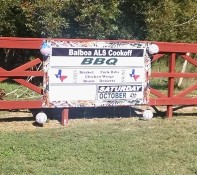
That’s okay because nothing was going to stop us!
We visited, relaxed, and had a nice time that first night.
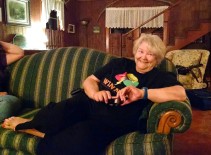

The next morning we awoke with a sense of business. Time to write! At first this was all I could think about, a keyboard staring back at me.
I’m so glad I have an outline to keep me on track. Once I got started, I was in the groove and made some good progress. Throughout the day, we wrote in writing sprints. They were usually about 30 minutes long with breaks in between. During the breaks I’d go outside and enjoy the cool weather and listen to the music from the cook off next door.  (We never did bet brave enough to see if they needed more judges.)
By the time we left on Sunday, all three of us had made quite a bit of progress on our projects. Mine was definitely more than if I had stayed at home. It was nice to share a creative space and have that extra discipline.
I declare the 2014 retreat a success!
Have you ever been on a writing retreat? Please share your ideas and experiences.
Posted in Writing by VP with .
I know I’ve posted this on my FB page and on Twitter but I wanted to put something here on my website. I’m going to have something published! I’m a member of Austin Mystery Writers and we decided to put together on anthology of stories, of course about murder! The anthology will be called Murder on Wheels and it’s expected to come out sometime in Spring of 2015. Look for my creepy story, “Rota Fortunae”! Lots of good stories, some funny and some intense.
Posted in Writing by VP with .
Today I posted an article on Austin Mystery Writers about a recent visit to Huntsville. I thought I’d post it here too.
I recently took a trip to Huntsville, Texas, and everything I saw at every turn stirred up old memories.
– Right behind the hotel where I stayed was the apartment complex where my cousins had lived. A few blocks away was a second place they lived.
– I passed a street of good friends of many years. They hosted a wedding shower for me.
– I passed the fancy restaurant where my grandmother lived for a while when she was a child. I remember that when she told us, we had no idea!
– I saw the nursing home where my other grandmother spent her last years.
All of this within a short drive just to get a burger! My mother’s family has been in the Huntsville area since the mid 1800’s so we have a lot of stories. A couple of my favorites:
– Sam Houston was a friend of the family. He used to come and visit.
– My great-grandfather was sheriff for a while and lived in the jail.
Neither of my parents grew up there, but my father moved there after my parents got divorced. He was offered a job at Sam Houston State University as a Criminal Justice professor. So I have a personal connection to the place through my mother and my father.
Besides the personal connections, there is something that draws me to the place.  Maybe it’s something about the vines growing in the pines, maybe it’s because I love history and old things, maybe it’s because of my “writer brain”, but when I pass old houses, I imagine children playing and grannies rocking while shelling peas. I love browsing through the old stores. I sometimes look at what they’re selling, though I’m more likely to be looking at the tin ceilings and wondering what the original store was.
The history of a place just calls out to me. I look at the red leather seats in the booth at a diner and remember when not everyone was welcome as a customer. I look at the young, happy families and wonder if they hear or feel the negative things that happened. Can they even imagine it? I pass the prison walls and know the prison has been there since 1849. Lots of famous and infamous people have been in those walls.
At the university I think of my great great aunts who attended when it was a Sam Houston Normal School. We’ve had a graduate from there in every generation. My grandmother went to kindergarten at Old Main, which has since burned down.
I think about my father when I sit on the bench outside the CJ building that’s dedicated to him. There’s a plaque with his name on it. He used to sit outside and smoke and talk to students. Inside the building there’s a big picture of him. 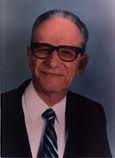 Next to it are plaques with names of students who have received scholarships named after him.
Sometimes when I’m in town, I visit the cemetery. I look up my folks and browse around. Yep, some people like museums, I like cemeteries. When you’re looking at someone’s headstone, you see when they were born and when they died. You can see if they were married or had children buried with them. So many stories untold.
It’s all a bit overwhelming for me at times. But I guess it’s no surprise that I like to write historical fiction.  For me the place is full of mystery, history, conflicts, love, death and birth. Those piney woods have a lot of secrets.
Do you have a place that calls to you?
Posted in Writing and tagged fiction, history, memories, Sam Houston, Writing by VP with .
Today I’d like to share an article written by a friend, Vaughn Roycroft, who is currently working on his historical fantasy trilogy, The Broken Oaks trilogy. Today’s article is about the writer’s process of research and he hits the nail of the head. It spoke to me so much that I wanted to share it with you.
Whether you are researching current police procedures or rituals of ancient Rome, every writer has to do research. Roycroft talks about his process and the pros and cons of getting lost down the rabbit hole.
I’ve included the article here, but if you’d like to share it or see it on his blog, complete with writers’ comments, (And I share a little something in the comments section), go to:
http://vaughnroycroftblog.com/2014/05/02/story-research-letting-the-brain-assist-the-heart/
Enjoy!
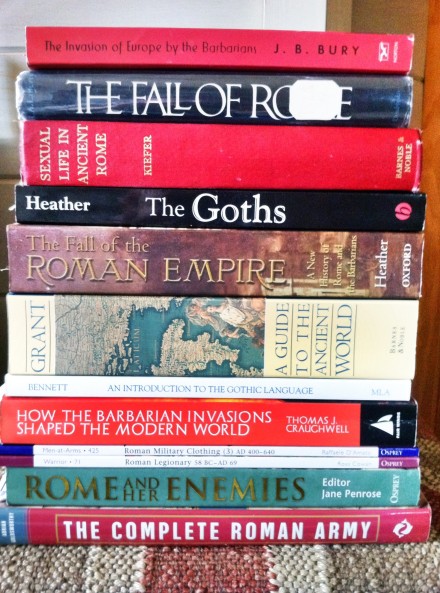 An Intricate Mess:
“If a cluttered desk is a sign of a cluttered mind, then what are we to think of an empty desk?”~Albert Einstein
I’ve written about my approach to world-building before, in general here, and in regards to names and naming here. But my friend Heather Reed recently undertook a new historical fantasy project, and she asked me specifically about my approach to researching the Broken Oaths trilogy. In looking back at my notes, I’m both excited for her and amazed.
Excited because they remind me of the adventure of the hunt, and the thrill of discovery. But amazed by the wide and disparate variety of sources that I mined for my story elements. In wading through what can only be called a disorganized mess, it’s a wonder that I was able to arrive at anything coherent.
This is one of the reasons I subscribe to the notion of a story muse. I’m the antithesis of organized, which seems contrary to being a good researcher. And yet somehow I was able to pull a story out of my intricate mess.
As an example, I give you my namey-namer cheat-sheet (see photo). It’s a simple 81/2” x 11” sheet of plain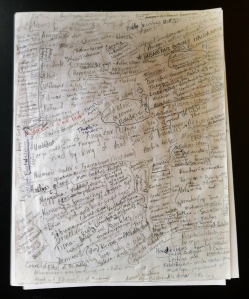 white paper that started out as a short list of possible character names. It’s now covered, front and back, with hundreds of names and obscure references. Please note there is very little means of organization, other than a handful of breakdowns by character group. And yet it continues to serve me well. I’m not sure how I find such a crazy resource helpful, but every time I need to check a name, this is my go-to reference. Honestly, I rarely need it. It’s mostly in issues such as: “Now what’s that secondary character’s grandmother’s name again?” And somehow I know what part of which side to look to find gramma’s name. This from a guy who honestly can’t recall his own phone number. Go figure.
Getting Wet:
“Pearls do not lie on the seashore. He who desires one must dive.” ~Chinese Proverb
We’re in the information age, right? And with so much access to a mighty river of information, the toughest part is going to be finding the tributaries and offshoots that apply to your story. In order to do that, sticking your toe in will not do. You’re going to have to get wet.
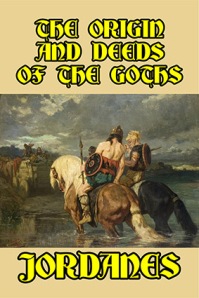 And you never know where the currents will carry you. For example, my quest for original source material about the Goths swiftly revealed a scarcity. Which is why I was so excited to find one of the few existing documents about the Goths by a Goth—Jordanes’ The Origin and Deeds of the Goths. Although I quickly realized Jordanes was writing about previous generations with few specific references and an obvious quantity of bluster, one note caught my attention and held it. He claimed that the Greek myth of the Amazons originated with the Ancient Greeks’ discovery of a group of Goth women whose husbands and sons had left them on the north shore of the Black Sea to raid in Persia and Egypt. I was fascinated, and it led to months of study of the Amazons and related myths and topics. And ultimately, to my creation of the Skolani—an all-female warrior sect that plays a prominent role in all of my work. All from a paragraph in an ancient treatise. There were no kickass warrior women on my radar at the onset, but oh-how-glad I am that I was willing to dive and found my way to them. They are most certainly a pearl.
There’s a lot to take in, on most any subject. But it’s difficult to pick and choose your sources. I say dive in and let it wash over you. Go with the flow. You might end up somewhere you like.
Panning For Gold:
“The subconscious is a hundred times smarter than we are. We’re just taking dictation.”~Steven Pressfield
In hindsight, I wish I’d worried less about delving for specifics. I wish I’d gone in with only the idea that I was going to educate myself and feed my enthusiasm, knowing the rest would more or less take care of itself. Because that’s what ended up happening.
As another example, in my research of the Goths, I began by broadly perusing subjects pertaining to the Germanic Tribes at the height of the Roman Empire. I studied their social structure and kingship. I went on to study their laws and mores, settlement layouts, agriculture, games and amusements, clothing and jewelry, migration (causes and effects), and their weapons and warfare. What I really wanted was more specific information about how they governed themselves. Sadly, there is little information, and much of it is conflicting.
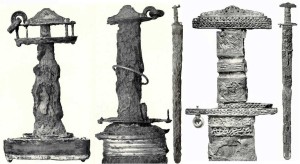 But in the course of my search, as I studied the last topic—weapons and warfare—I now see what became the roots of my solution. There is an entry in my notes from a book called Battle-ax People, by Olivia Vlahos. The note pertains to the expense and significance of swords, and how certain swords became important relics passed from father to son, occasionally symbolizing a legacy of chieftainship. From another book called The Everyday Life of Barbarians: Goths, Franks, and Vandals, by Malcom Todd, I note that some important swords are inscribed with oaths, and occasionally such oaths appeared in the form of rune rings, attached to the hilt. The two notes are only a few sentences each, and were taken several months apart. And yet they clearly led to the Futhark swords of the Gottari ruling clans—the symbolic relics which represent the leadership of my two ruling clans.
I don’t see any notation that I’d put the two together—inherited swords symbolic of leadership and rune rings on hilts—at the time. But when it came time to outline, a symbol was needed, and there they were: the Futhark swords. I invented much of the rest of the elements of their governance from other tidbits gleaned over the course of my research, and it all fell into place once I had the Futhark swords. So I’d advise you not to bother looking for bright baubles as you go. Just scoop it in. Your muse (or your subconscious) will sift through for the gems.
Take It From Me (Or Don’t):
It might seem silly, now that you’ve read this far, that a guy who admits he’s a disorganized and somewhat aimless researcher is now going to give you advice on researching. But I am (going to give advice, not silly—or is it both?). Take it or leave it. It’s all in good fun (as any research for fiction should be).
*Find your passion! As I say, this should be fun. If you’re passionate about your subject or era, your research will not only be easy, but a pleasure—something you’ll look forward to doing.
*Give yourself ENOUGH time, but not ENDLESS time. If you’re having fun researching, as you should, you might find a point of diminishing returns. At some point we all have to stop researching and start writing.
*Start online, but zero in with books. Nothing beats the internet for gaining a broader understanding of a topic or era. But you’ll soon realize that if you want any depth and citation, you need to go to books. I buy as many as I can, but for most of us, trips to the library become an indispensable part of any major research project.
*Don’t be afraid to follow the rabbit down the hole. I think I’ve pretty well illustrated this point. If you’re writing about Goths and Romans in the 4th Century AD, don’t be afraid to spend a few months chasing Amazons across Ancient Greece and beyond. Or something along those lines.
Let Your Brain Assist Your Heart:
“I’ve noticed this effect: When writers undertake to write a story, the insights and information they need to write it well tend to arrive unasked for. Those things arrive at the right moments, perfectly timed gifts from the story god.
Or, is it rather that an author’s brain, working on a story, begins to grab available information and synthesize it, which is to say bend, blend and meld it to the purposes of the story?
Is it magic, serendipity or synthesis? Whatever it is, I don’t think it’s accidental. I think authors make it happen. It’s the brain assisting the heart.” ~Donald Maass
Don’s quote above is from a comment he made on a wonderful WU post this week. The post is largely about the mysterious and seemingly random serendipity of the power of the brain, by Maureen Seaberg, the co-author of Struck by Genius. And, as he often does, for me Don took the post to a whole new level.
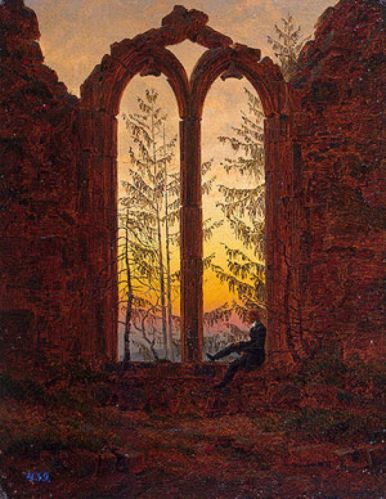 I allotted a year to research when I began my manuscript in earnest. And I ended up with a pile of notebooks even larger than the one pictured above. But once I started writing, I rarely dug through that disorganized mess (perhaps in part because it was disorganized). The insights and information I needed tended to arrive as perfectly timed gifts from the story god. Or did my brain somehow know better than my conscious self which bits to grasp and gather, to then “bend, blend and meld to the purposes of the story”? Either way, I’m glad I somehow found my way to allowing my brain to assist my heart.
Moving forward, I’m hoping I can repeat the process, but I’m not too worried. I’ve already stumbled onto streams that have led my subconscious to begin the bending, blending and melding all over again.
Now it’s your turn. Is your research organized? Do your notebooks have color-coded tabs and an index? Do you trust that your brain will know better than your conscious self, and will assist your heart?
Posted in Writing and tagged Donald Maas, research for fiction, Vaughn Roycroft, writer research, Writer Unboxed by VP with .


 (We never did bet brave enough to see if they needed more judges.)


